The Safest, Fastest, Cleanest residential demolition contractor in your service area
We handle permits, demolition, and cleanup — so you don’t have to stress or guess

Mitigate Top 5 Safety and Financial Risks in Commercial Demolition
This guide breaks down the five most critical risks every demolition contractor, project manager, and safety officer faces today. More importantly, it offers quantifiable, real-world solutions you can apply immediately to protect your crew, your bottom line, and your reputation.
DEMOLITION
11/10/20257 min read
Top 5 Safety & Financial Risks in Commercial Demolition — and How to Mitigate Them
By A. L. Hilbun • IDEALTEX
The commercial demolition industry is booming — but so are its risks. Every project brings the challenge of balancing safety, cost, and compliance while dismantling structures that can hide unpredictable hazards. One wrong calculation or missed inspection can lead to worker injuries, costly overruns, regulatory shutdowns, or million-dollar liabilities.
That’s why understanding the top safety and financial risks in demolition isn’t just important — it’s essential for profitability and survival.
This guide, developed by IdealTex, breaks down the five most critical risks every demolition contractor, project manager, and safety officer faces today. More importantly, it offers quantifiable, real-world solutions you can apply immediately to protect your crew, your bottom line, and your reputation.
By the end, you’ll know how to:
Reduce incidents by measurable margins
Control costs and schedule creep using proven benchmarks
Avoid compliance penalties and environmental fines
Strengthen your bid proposals with data-driven safety metrics
Build a more resilient, trusted demolition operation
Commercial demolition is one of the most complex, risky sectors in the built-environment. As covered in the industry, with revenue above $11 billion (US) in 2025 growing at ~5 % CAGR. Contractors (like IdealTex) must understand not only how to execute demolition but what risks to avoid and how to quantitatively manage them.
Below are five major categories of risk—both safety- and financially-oriented—each with a breakdown of: what the risk is, why it matters (with numeric/statistic where available), and a quantifiable mitigation solution.
1. Worker & Public Safety Risk: Injuries, Fatalities, Debris/Collapse
Risk description
Demolition involves heavy equipment, uncontrolled falling material, unstable structures, hazardous materials and unpredictable aspects of older buildings. According to the Bureau of Labor Statistics (BLS), in 2020 there were 78 workers who died in demolition accidents in the U.S. alone. Other sources call out that hidden hazards (asbestos, PCBs, lead) may exist in older commercial buildings.
Why it matters
Loss of life and severe injury leads to direct cost (workers’ comp, medical, litigation) and indirect cost (downtime, reputation, regulatory scrutiny).
Collapse risk also threatens surrounding properties, public safety, and can result in huge liability. For example, the 2013 building collapse in Philadelphia (adjacent building demolition) caused fatalities
Non-compliance with safety standards can shut down sites or delay projects, impacting revenue and profitability.
Quantifiable solution
a) Training & certification target: Ensure 100% of field staff complete a demolition-specific safety training (e.g., certified by OSHA or equivalent) before site entry.
b) Incident rate reduction: Aim to reduce injury/incident rate by, say, 30% year-over-year in your program. If you currently have an incident rate of 5 incidents per 1,000 worker-months, aim to reduce that to 3.5 or less.
c) Pre-demolition hazard audit: Conduct a formal hazard audit of the structure with quantified scoring (e.g., scoring 1-5 for each hazard type: asbestos, structural instability, adjacent property risk). Aim for zero high-score items (>4) before active demolition begins — or schedule remedial action.
d) Public/adjacent property buffer zones: Define a quantifiable buffer (e.g., minimum 30 ft clearance around perimeter or barricade thickness based on building height) and monitor until debris falls within that zone. Track “near-misses” and aim for zero per quarter.
2. Hazardous Materials & Environmental Risk (Asbestos / Lead / PCBs / Dust)
Risk description
Many commercial buildings slated for demolition contain hazardous materials—like asbestos, lead-based paint, PCBs in caulking, and silica dust exposure. One article states: “as many as 60 % of commercial buildings built before the 1970s may have caulk containing PCBs.” Also, uncontrolled dust and debris from demolition contribute significantly to health risks.
Why it matters
Non-compliance with environmental regulations can lead to large fines, project stoppages, and reputational damage.
Remediation costs can be huge and unplanned, converting what seemed like a standard demolition contract into a major environmental remediation project (with much lower margins or losses).
Health exposures (workers or public) may lead to long-term liability, insurance claims, or criminal/regulatory action.
Quantifiable solution
a) Pre-demo hazardous-material survey: For every project, allocate ~ 1–3% of contract value for a full hazardous-material survey (asbestos, lead, PCBs, mold). Document results in a database.
b) Set remediation contingency: Based on survey risk-score, set aside 5-10% contingency of the demolition budget for hazardous-material incidents or scope change.
c) Dust-control numeric metric: Use measurable dust-monitoring (e.g., PM2.5 readings, number of exceedances per day). Aim to maintain dust levels < 50 µg/m3 (or local regulation) during active demolition. Track daily and aim for < 5 exceedances per month.
d) Recycling & waste diversion target: Since > 90 % of demolition projects recycle/salvage materials per National Demolition Association (NDA) survey. Set a target of e.g. 75% of debris tonnage diverted from landfill to reinforce regulatory-compliance and generate potential salvage revenue.
3. Structural/Collapse Risk & Adjacent Property Damage
Risk description
When demolishing large commercial structures, the risk of partial collapse, uncontrolled debris trajectory, damage to adjacent buildings or underground utilities is significant. One article emphasizes that debris can strike neighboring structures especially in layer-by-layer methods.
Why it matters
Damage to neighboring structures triggers claims, increased insurance premiums, contract terminations, and delays affecting financial performance.
A structural collapse event may cause complete project shutdown, large liabilities (tens of millions depending on site size) and fatality risk.
Insurers may refuse coverage or charge higher premiums post-incident, raising future project cost.
Quantifiable solution
a) Pre-demo engineering review: For each project, obtain a structural-engineering report analyzing building, adjacent structures, and utilities. Use a scorecard (1-10) for adjacent-property risk; if score > 7 then require reinforced barricade or additional support.
b) Buffer/barricade specification: Quantify barricade zone: i.e., for every meter of building height, maintain 1.5 meters of barricade radius (or per local regulation). Example: a 30 m high building requires 45 m radius barricade. Track compliance daily.
c) Insurance cost metric: Track your project’s insurance premium / contract value ratio. For instance, ensure the ratio stays < 1.5% of contract value. If your premium spikes beyond that, trigger review of risk controls.
d) Adjacent-property claim rate: Track “claims for adjacent damage” per year (e.g., number of claims per 100 projects). Set goal to maintain this at < 1 claim per 100 projects (or zero).
4. Cost Overruns & Budget / Schedule Risk
Risk description
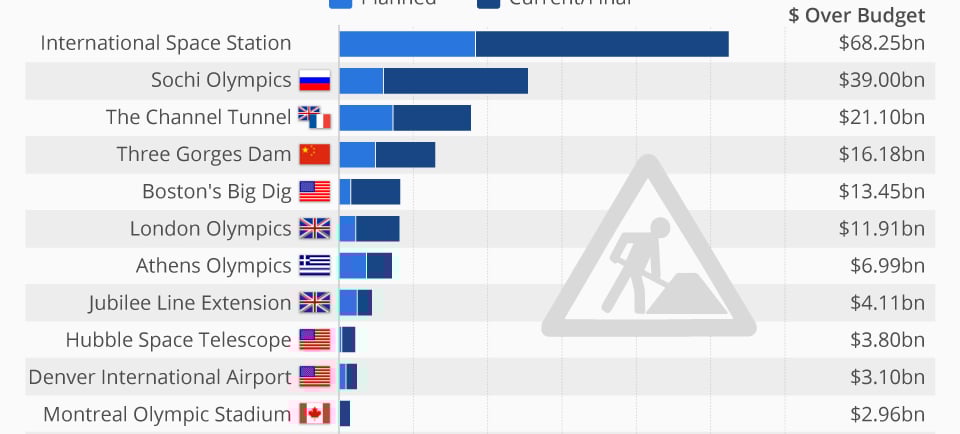
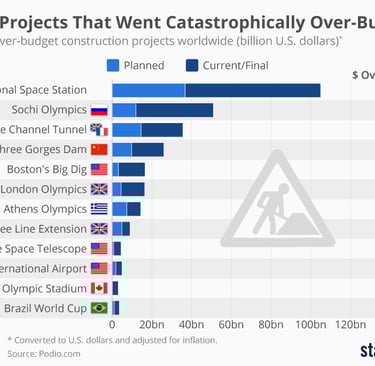
While specific demolition industry cost-overrun data is limited, broader construction data shows that cost overruns are pervasive: one study found that “nationwide construction projects exceed their budget by 16% at minimum — often far more.” Given the complexity of demolition (hazards, unknowns, salvage, environmental remediation), the risk of budget and schedule overruns is high.
Why it matters
Cost overruns reduce profit margin, potentially turning a profitable job into a loss.
Schedule delays incur indirect costs (equipment rental, workforce wages, project holding costs) and may trigger penalties or liquidated damages.
Poor cost control undermines client trust, affects repeat business, and may increase the cost of capital (safety bonds, insurance).
Quantifiable solution
a) Contingency fund: Always include a contingency equal to 10-15% of the budget (for standard demolition) or higher (20%+) for high-risk jobs (older buildings, high salvage complexity). This aligns with recommendation from common-industry sources.
b) Monitor budget variance in real time: Track budget vs actual cost monthly. Set a trigger if actual cost > 5% above budget at 25% project completion; >10% at 50% completion.
c) Schedule-performance index (SPI): Track SPI = (Work performed / Planned schedule) at monthly intervals. Keep SPI ≥ 0.95. If below, trigger corrective action.
d) Contract change-order monitoring: Track number of change orders and their cost impact. Set a KPI: change-order cost ≤ 5% of original contract value. If change orders exceed that, reassess risk controls.
5. Regulatory & Compliance Risk (Permits, Waste Disposal, Insurance)
Risk description
Demolition projects must comply with myriad regulations: building permits, environmental permits (hazardous-material removal), waste-disposal regulations, worker safety (OSHA), insurance requirements, salvage/recycling mandates. Failure to comply can lead to fines, stop-work orders, loss of license or insurance coverage. For instance, material such as asbestos and PCBs require special regulatory handling.
Why it matters
Regulatory fines and penalties can be substantial (tens of thousands to millions).
Stop-work orders or revocation of permit freeze cash flow and extend schedules.
Insurance coverage may be voided if compliance lapses occur, exposing the firm to full liability.
Quantifiable solution
a) Compliance checklist completion rate: Develop and require a 100-item (or appropriate) compliance checklist for each project (permits, worker training, waste disposal certificates, insurance certificates, salvage documentation). Set KPI: 100% checklist items completed before site mobilization.
b) Audit frequency and non-compliance rate: Conduct internal compliance audits monthly. Track number of non-compliance findings and aim for 0 critical findings/year and ≤ 5 minor findings per year.
c) Regulatory budget allocation: Allocate 2-3% of contract value explicitly to compliance cost (permits, audits, disposal fees) to avoid cost bleed.
d) Insurance-premium ratio monitoring: As part of project evals, track “insurance premium / contract value” and ensure projects maintain below predetermined threshold (e.g., <1.5 %) and that policy coverages (liability, pollution) meet minimums.
Summary Table
#-Risk Category, Why It Matters (Impact), Quantifiable Solutions
1-Worker & Public Safety Risk
Demolition sites have high fatality and injury rates — 78 U.S. worker deaths in 2020 alone. Collapses or debris can harm workers and bystanders, resulting in lawsuits and costly downtime.
• Train 100% of field staff in OSHA demolition safety
• Reduce incident rate by ≥ 30% YoY (e.g., from 5.0 → 3.5 per 1,000 worker-months)
• Enforce ≥ 30 ft buffer zones and monitor zero near-miss events
2-Hazardous Materials & Environmental Risk
Older buildings often contain asbestos, lead, PCBs, and silica dust — violations cause fines, project stoppages, and health liabilities.
• Perform pre-demo hazardous-material surveys (1–3 % of project cost)
• Maintain PM2.5 dust < 50 µg/m³ during operations
• Allocate 5–10 % contingency for remediation
• Divert ≥ 75 % debris to recycling/salvage
3-Structural/ Collapse & Adjacent Property Risk
Partial collapse or debris can damage nearby structures, triggering multi-million-dollar claims and insurance hikes.
• Obtain engineering risk score (1–10) per project
• Maintain barricade radius = 1.5× building height
• Keep ≤ 1 adjacent-damage claim per 100 projects
• Track insurance-to-contract ratio < 1.5 %
4-Cost Overruns & Schedule Risk
Demolition projects regularly exceed budgets (industry avg. +16 %) due to hidden hazards, equipment downtime, or scope changes.
• Set 10–15 % budget contingency
• Monitor budget variance: trigger review if > 5–10 %
• Maintain Schedule Performance Index ≥ 0.95
• Limit change orders ≤ 5 % of contract value
5-Regulatory & Compliance Risk
Permit lapses, unsafe waste disposal, or incomplete documentation can cause stop-work orders, fines, and loss of insurance coverage.
• Complete 100-item compliance checklist before mobilization (100 %)
• Conduct monthly audits with 0 critical findings
• Allocate 2–3 % budget to compliance/permits
• Keep insurance premium < 1.5 % of contract value